 Blog ZARI
Beekeeping in Kenya: choose an apiary site before buying hives
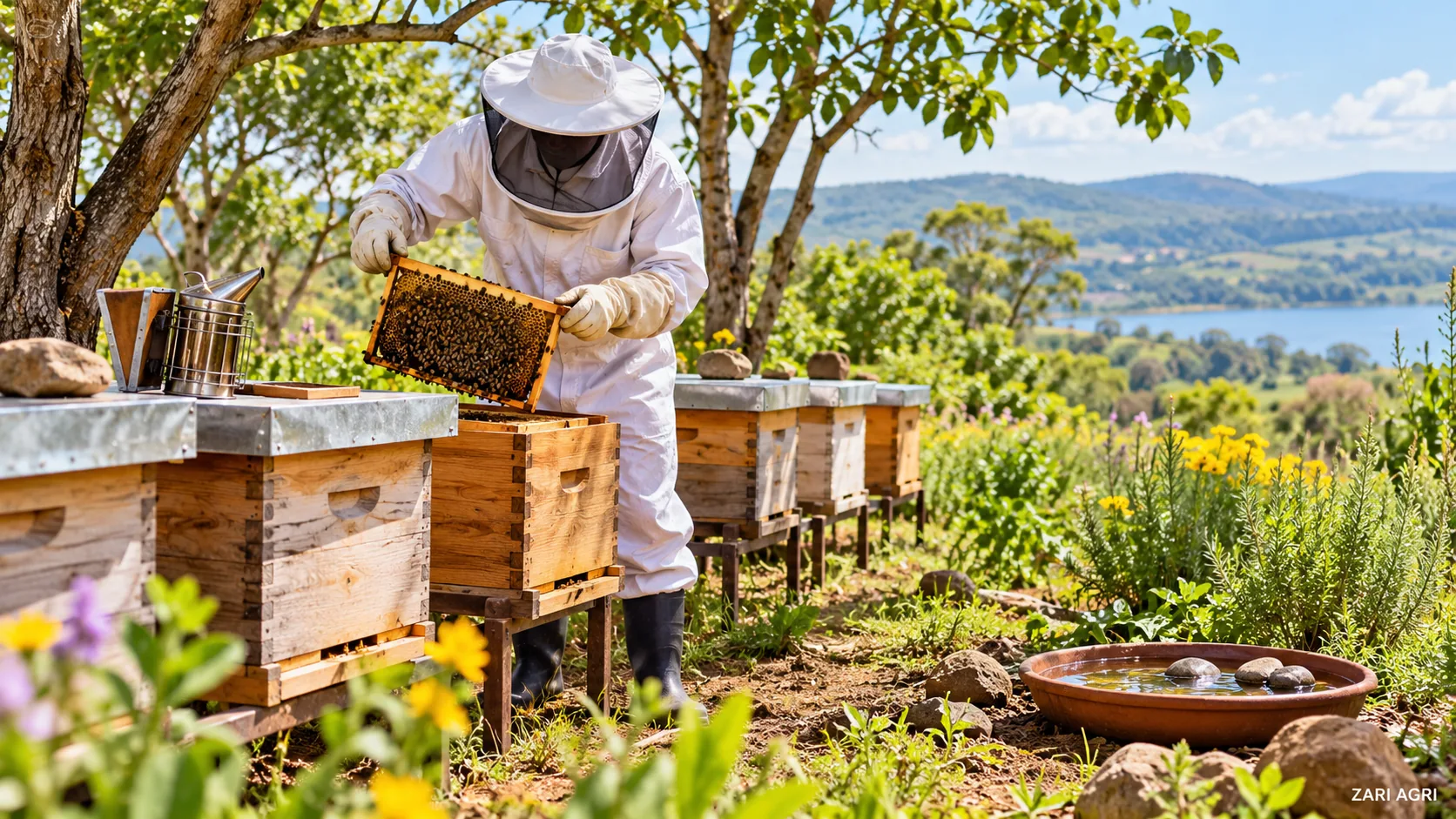
· ZARI AGRI
A useful first investment in beekeeping is a careful site assessment. For a Kenyan smallholder, buying hives before checking the surroundings can create avoidable problems with access, neighbours and seasonal food resources. The FAO identifies site selection as the first step towards successful hive installation and colonisation. This guide helps organise that assessment; it does not promise hive occupation or a honey yield.
Map the surroundings
Walk the proposed area with a local beekeeper or extension worker. Identify flowering plants, seasonal gaps, water access, paths, livestock areas and nearby spraying activity. A green landscape at one time of year does not prove that forage will remain available throughout the season. Keep notes about what flowers and when.
Consider people before hive positions
Keep hive entrances and flight paths away from busy footpaths, homes and livestock gathering points. Discuss the plan with the landholder and affected neighbours. Select a location that allows calm working space and safe access. Ask local specialists about suitable separation distances and applicable requirements rather than using a universal distance for every site.
Plan water, shade and drainage
Check that bees can access a reliable water source without creating a nuisance at neighbouring homes. Assess the site's exposure to heat, wind and flooding, and plan stable hive supports. Local conditions determine the most suitable shade and orientation. Avoid placing hives where standing water or falling branches threaten routine operations.
Make inspection practical
You need a manageable route for equipment and honey transport, protective clothing and space to work. Plan how inspections can happen without disturbing passing people. Use a suitable veil and other protective equipment, and learn handling with an experienced beekeeper before working alone. A cover photograph is an illustration, not a handling lesson.
Write a small starting plan
Record who controls the land, who manages the hives, the planned equipment, water arrangements and the inspection schedule. Start at a scale you can supervise. Include the cost of protective clothing, transport and clean handling equipment in your budget, rather than counting hive purchase alone. Record expenses and observations to guide later expansion.
Check the site through the seasons
After installation, keep a record of flowering, water availability and colony observations. Revisit the site plan when farming activity, neighbours or access changes. Honey production depends on colony condition and local resources; a well-organised apiary improves management but cannot guarantee a harvest.
Sources
Connect your honey business to ZARI
Publish an offer or a request with your location, actual quantity, packaging and contact method. Use real photographs for commercial listings and avoid unverified certification claims.
ZARI market