 Blog ZARI
Buying African sesame: a practical quality checklist before shipment
· ZARI AGRI
A sesame offer is not only a price and a tonnage. Before a buyer accepts a lot, the sampling method, moisture, visible contamination, odor, storage conditions and contract specifications should be clear.
Start with representative sampling
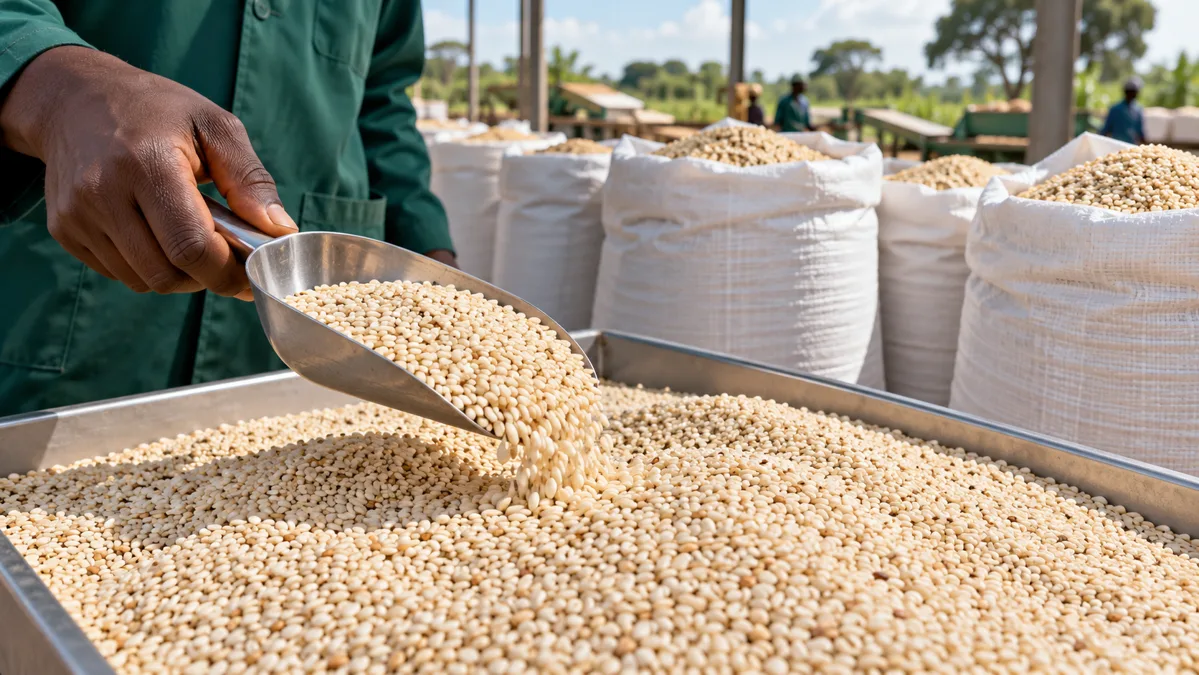
A handful from one bag cannot represent a large lot. Take sub-samples from different parts of the shipment or warehouse using an agreed method, combine them correctly, label the sample and record the lot identity.
Check visible quality before laboratory testing
Look for excessive foreign matter, insects, uneven color, damaged seeds, heating, moldy odor or rancid notes. Visual checks do not replace laboratory analysis, but they can identify lots that need closer investigation.
Moisture and storage matter together
Higher moisture combined with warm, humid storage can increase the risk of quality loss. Use a calibrated method, record the result, and compare it with the buyer’s written specification instead of assuming one universal acceptance limit.
Before loading, verify five points
- Lot origin and crop year are documented.
- Bags are clean, dry and appropriate for the contract.
- Stored product is protected from water, pests and strong odors.
- Quality test requirements are agreed before shipment.
- A final representative sample is retained for traceability.
Put specifications into the contract
Moisture, purity, foreign matter, color, microbiological or chemical testing, pesticide residues when required, packaging and inspection method should be agreed in writing. The destination country may impose additional food-safety and import requirements.
This checklist supports commercial pre-inspection. Final acceptance should follow the signed contract, accredited test results where required, and current destination-market rules.
Buying or selling sesame?
Publish origin, quantity, crop year, quality information, delivery point and commercial terms on the ZARI Market.
Open ZARI Market