 ZARI Blog
Invasive water hyacinth in Africa: protect irrigation and lakes
An in-depth guide to identifying water hyacinth, tracking impacts on irrigation and fisheries, and planning safe integrated management.
· ZARI AGRI
Recognize the invasive plant
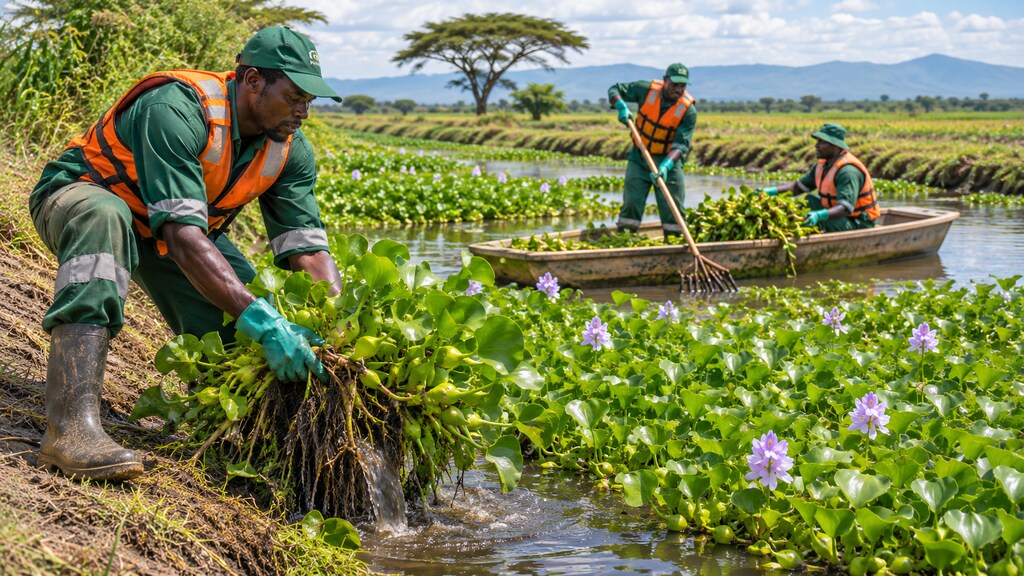
Water hyacinth, also known as Pontederia or Eichhornia crassipes, is a floating perennial with glossy leaves and violet flowers. It can form dense mats in sheltered waterways. Confirm identification locally before acting because other aquatic plants may resemble it.
Assess impacts on farming and fisheries
Mats can block irrigation intakes, pumps, canals and boat access while altering light and oxygen dynamics in water. Actual losses depend on the extent of cover, flow, nutrient inputs and the use of affected water bodies.
Map and contain new outbreaks
Record infestation boundaries, critical water intakes and movement after storms. Consider physical collection points only where safe and authorized. Do not move fragments or equipment carrying plant pieces into unaffected lakes or channels.
Select integrated control
Hand removal can help with small early infestations if biomass is collected completely. Large-scale mechanical removal requires equipment, worker safety and disposal planning. Biological control agents require scientific assessment and regulatory permission; never release organisms independently.
Disposal and cost accounting
Plan protective equipment, transport, drying areas away from flood pathways and regular return visits. Test for pollutants before considering compost or livestock uses. Compare total maintenance costs and recovered water access, not only the first removal bill.
Avoid unsafe shortcuts
Do not apply herbicides in waterways or release control species without authorization and environmental safeguards for drinking water, fish and irrigation. Long-term monitoring and combined methods are essential.
Field action plan
- Assess impacts on farming and fisheries
- Map and contain new outbreaks
- Select integrated control
- Disposal and cost accounting
Frequently asked questions
Is a single cleanup enough?
Usually not. Fragments and nearby populations can cause rapid reinfestation.
Scientific references
water hyacinth control Africa · invasive aquatic weeds · irrigation canal blockage · lake fisheries · integrated aquatic weed management · Pontederia crassipes