 ZARI Blog
Livestock health alerts: what to do before a diagnosis is confirmed
· ZARI Editorial
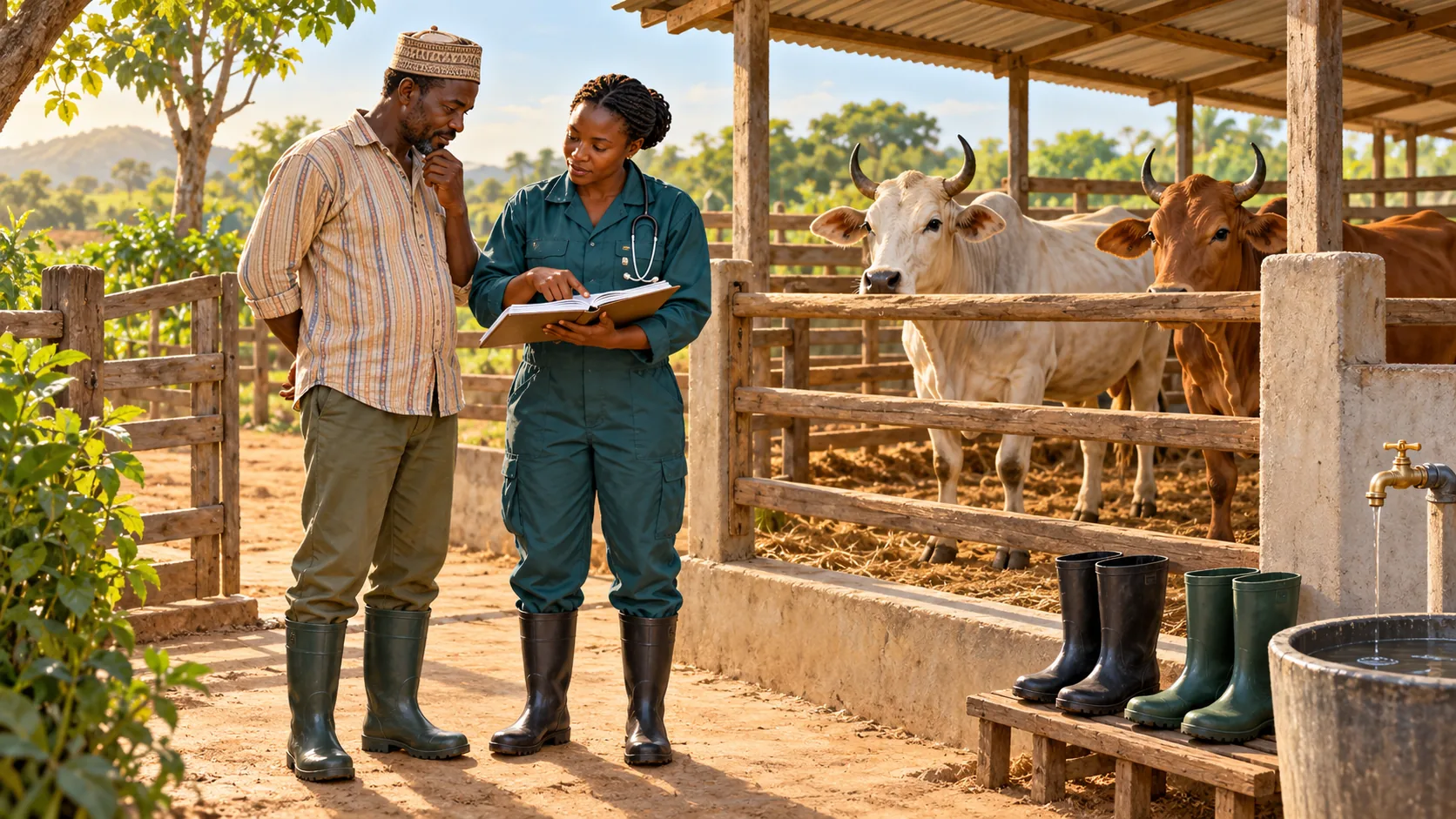
A message about disease at a nearby market should prompt you to check its location, date and source, then seek veterinary help if you suspect illness. A disease name circulating in a conversation is not a diagnosis.
What was actually reported?
The ACF/OPEN-CI bulletin published on 26 October 2026 reports illnesses at three of 19 sentinel sites in northern Côte d’Ivoire during August–September. [1]
These reports do not measure national prevalence or establish a current outbreak on your farm. Observations predate publication: check subsequent updates with veterinary services.
Suspected foot-and-mouth disease needs confirmation
WOAH explains that clinical signs cannot reliably distinguish foot-and-mouth disease from other vesicular diseases; confirmation requires laboratory testing. [2]
Contact a veterinarian or local veterinary service immediately if unusual signs or rapid deterioration occur. Do not delay reporting to collect every photograph or wait for an AI answer. Follow professional instructions on separating suspect animals and controlling movements. Do not take a suspect animal to market for sale.
A useful record for the veterinarian
| Record | Useful detail |
|---|---|
| Location and onset | Farm, date and time first noticed |
| Affected animals | Species, age group, number affected and group total |
| Observed signs | Description and progression without assuming a disease name |
| Contacts and movements | Dated purchases, markets and new arrivals |
| Actions already taken | Any products used, timing and professional consulted |
| Verification | Suspicion, veterinary examination or laboratory result, with date and document |
Keep original observations and append later findings. Safe photographs may help describe a case, but cannot replace examination and testing.
Before purchasing or introducing animals
- Check origin, health documents and current local movement instructions.
- Request available vaccination and examination dates; an old document does not certify current health.
- Arrange the reception examination and introduction procedure with a veterinarian. Clarify transport and cancellation terms.
- Do not select treatment or vaccination from a rumour: use requires professional assessment and local compliance.
Keep digital records honest
Structured notes make a question clearer: what, when, where and how many? They do not turn assumptions into verified findings. Keep farmer identities and private herd locations out of public groups. Do not label a market infected without official confirmation. This guide does not announce a ZARI service offering confirmed veterinary diagnoses or live outbreak alerts.
Frequently asked questions
Can one photograph confirm foot-and-mouth disease?
No. A photograph describes an observation. Suspected cases need veterinary assessment and appropriate confirmation tests.
Does no report from my village mean no disease?
No. Missing information does not establish absence of disease. Continue monitoring and follow local veterinary advice.
Sources
General editorial guidance to adapt with a qualified local adviser. Numerical examples are hypothetical, not market quotations or recommended doses.