 ZARI Blog
Sahel fodder shortages: plan feed reserves before the dry season
· ZARI Editorial
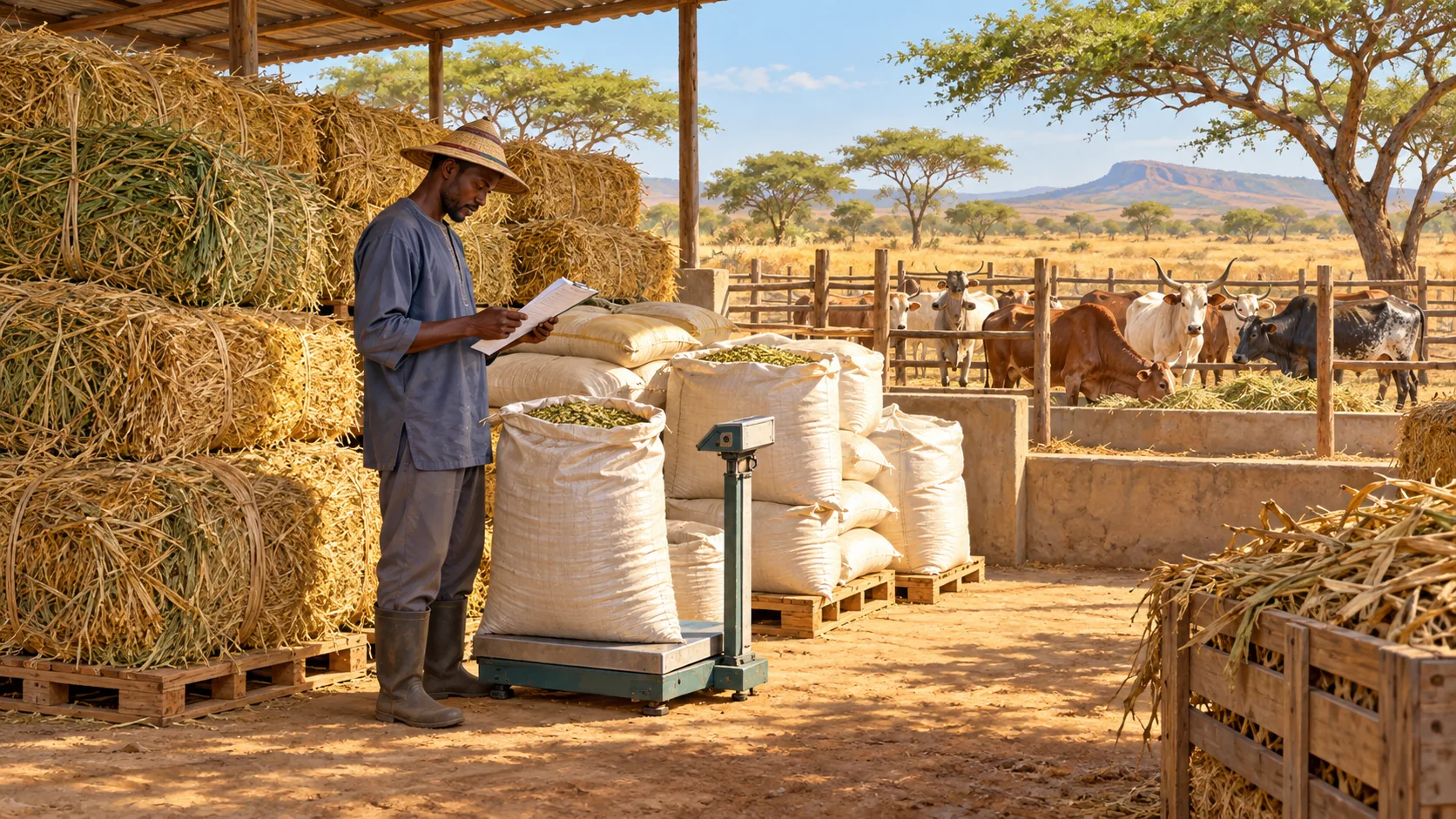
Before buying feed or moving a herd, establish three farm-specific figures: usable stock, daily use and delivery lead time. Regional alerts then become a reason to check your own situation rather than a ready-made purchasing decision.
What the evidence shows
ACF estimates satellite-derived biomass in Bambara Maoudé, Mali, at 0.7 million tonnes in 2026 versus 1.8 million in 2025. The report was published on 26 October 2026. [1]
This is not an inventory of accessible grazing or feed for sale. Check local access, water, pasture quality and your actual reserves. Do not apply a regional change directly to your farm.
Turn feed stock into days of cover
Keep a separate record for each feed. Weigh usable stock, excluding rejected material and promised deliveries. Use recorded daily consumption of that same feed. Ask a qualified adviser to assess the ration for your animals and production stage.
Days of cover = usable stock of a feed in kg ÷ daily use of that feed in kg.
| Item | Assumption |
|---|---|
| Usable stock of one feed | 900 kg |
| Recorded herd use | 30 kg/day |
| Coverage | 900 ÷ 30 = 30 days |
| Delivery lead time + planning buffer | 7 + 5 = 12 days |
Here, reorder when 12 days of stock remain, provided those assumptions still hold. Recalculate when herd size, consumption or lead time changes. This calculation does not establish nutritional adequacy or make wet and dry feeds interchangeable kilogram for kilogram.
Before buying feed
- Specify feed type, composition and net bag weight; request a representative sample when needed.
- Check packaging and storage. Set suspect lots aside for qualified assessment; appearance alone does not guarantee safety.
- Get a written price including transport and unloading, with an expiry date.
- Separate stock available for delivery from reserved stock and expected arrivals. Date the check.
- Compare equivalent specifications per usable kilogram rather than per bag.
Turn an alert into a checked decision
Separate what you measured, what an identified source reported and what you assume for planning. If stock cover approaches the replenishment lead time, review purchasing with your group. Before moving animals, check local movement requirements, access, water and security.
This editorial planning method does not mean ZARI monitors your feed inventory or guarantees a supplier’s stock.
Frequently asked questions
Does a higher feed price prove a shortage?
No. Check deliverable quantities and delivery times separately. Prices can rise without a physical stockout.
Can a pasture map establish my herd’s feed needs?
No. Assess locally accessible resources and the herd’s requirements with a qualified adviser.
Sources
General editorial guidance to adapt with a qualified local adviser. Numerical examples are hypothetical, not market quotations or recommended doses.