 ZARI Blog
Twin lambs in Chad: what do we know about Mayo-Kebbi and Kirdimi sheep?
· ZARI AGRI
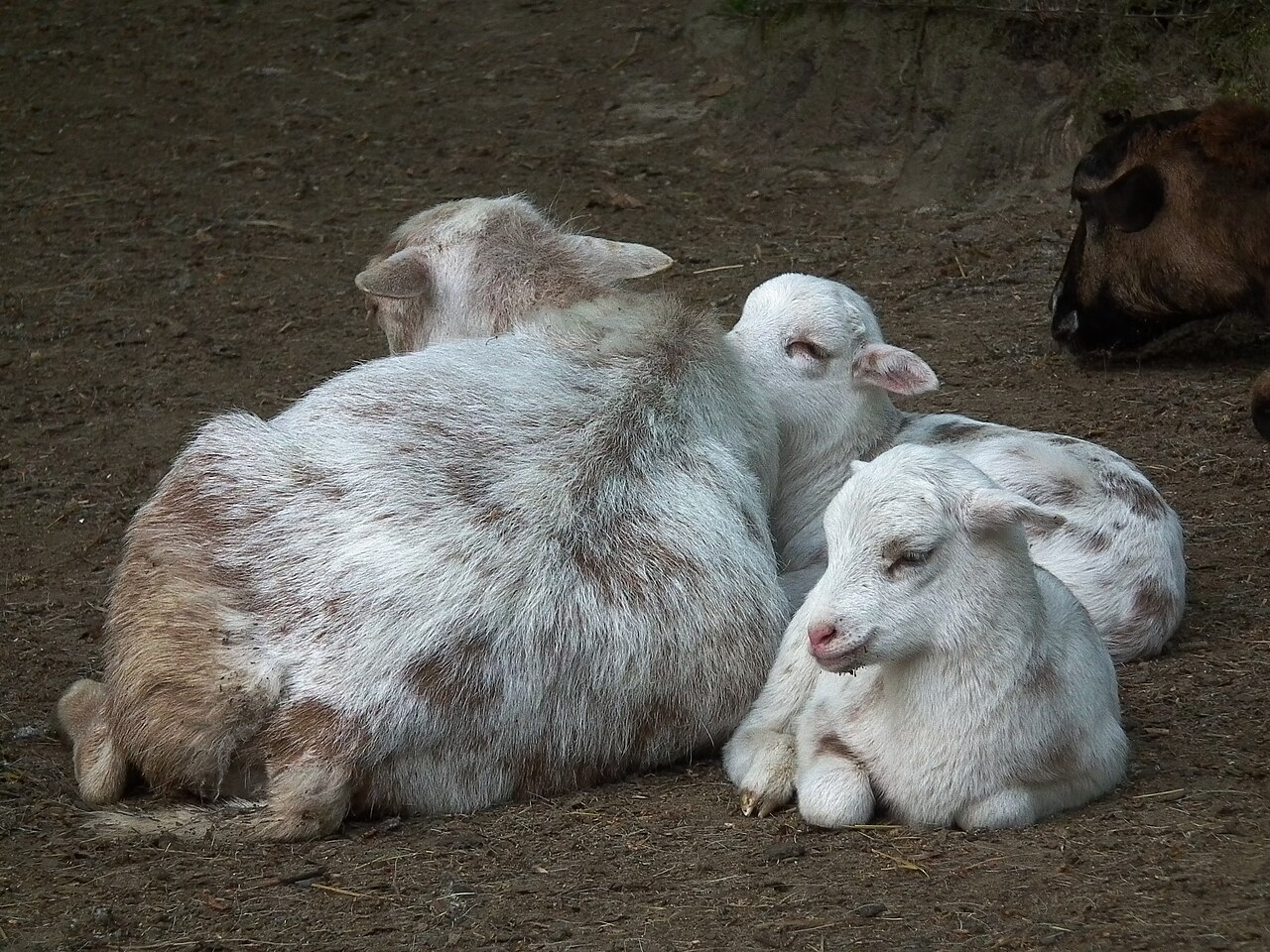
Research describes local Chadian sheep populations capable of multiple births. Choosing animals to buy requires more than a name used at the market.
Two names appear when investigating sheep that produce twins in Chad: Mayo-Kebbi and Kirdimi. References describe sheep in the south and south-west, with overlapping local names and classifications. Treat the name as a starting point for identifying a population and its origin, not a guarantee of twins at every lambing. [1] [2]
Promising figures, but historical ones
Djalal’s 2011 thesis, table 8 on printed page 30, reports figures attributed to Dumas (1980). The values concern the average number of lambs per lambing: [1]
| Population in the source | Lambs per lambing | Limit |
|---|---|---|
| Kirdimi | 1.24–1.53 | Historical values varying between observations |
| Mayo-Kebbi | 1.64 | A historical figure, not a current national average |
An average of 1.64 does not by itself establish a 64% twin-birth rate. An average can include single, twin and triplet births. The twin-birth rate requires the number of twin lambings divided by all lambings. Lambs born must also be distinguished from lambs surviving to weaning.
Connections with neighbouring countries
FAO links Kirdi/Kirdimi/Massa sheep in northern Cameroon and south-western Chad with the wider Djallonké group. More recent research describes West African Dwarf sheep across parts of West and Central Africa. These accounts describe distribution; they do not provide a current census of sheep called Mayo-Kebbi in every country. [2] [3]
| Chad’s neighbour | What the consulted sources support |
|---|---|
| Cameroon | Documented connections with Kirdi/Kirdimi/Massa in the north, with local naming and classification differences. |
| Nigeria | Presence of the wider West African Dwarf group, which does not establish distribution under the Chadian name Mayo-Kebbi. |
| Central African Republic | Included in the wider group’s range; no verified current twinning percentage is provided here. |
| Niger, Sudan and Libya | The consulted sources do not establish reliable current distribution or twinning rates for Mayo-Kebbi or Kirdimi by name. This is not proof of absence. |
Check records before buying
Ask for several lambing records showing the mother’s identity, lambs born and lambs surviving to weaning. Verify origin with an experienced local breeder or veterinary service. Colour and body size alone do not confirm identity. Some references also discuss Kirdi goats: their reproductive figures must not be transferred to sheep because the names resemble each other. [4]
Start with a small group whose origin and performance can be recorded in your own conditions. The claim that these sheep produce twins can then be assessed through identifiable mothers, real costs and lambs successfully raised to sale.
Practical step: investigate Mayo-Kebbi and Kirdimi locally, then judge animals by lambing records and lamb survival.
References
- Ardjoun Khalil Djalal (2011) — Élevage ovin périurbain au Tchad; table 8, printed p. 30 (PDF p. 42), citing Dumas (1980)
- FAO — Small ruminant production and the small ruminant genetic resource in tropical Africa; Djallonké section
- Da Silva et al. (2025) — History and genetic diversity of African sheep, Animal Genetics
- R. Dumas (1980) — Contribution à l’étude des petits ruminants du Tchad; AGRIS abstract
General guidance to adapt to farm conditions with a qualified adviser. Financial examples are hypothetical; historical figures do not guarantee current performance.