Olive oil and olives: Moroccan sourcing, global markets
For importers, wholesalers, purchasing teams, hospitality buyers and packers: compare olive oil and table olives, interpret trade figures and prepare an export purchase with clear quality requirements.
336,000 TonnesConsumption: five African markets — 2024/25
HS 150910: virgin oil in H0 nomenclature, not the whole 1509 heading. HS 200570: prepared olives. Kg converted to tonnes; USD thousands to USD millions. Do not add these to IOC crop-year figures. Morocco, Algeria, Egypt, Tunisia and Libya only. Calculated sum: 336,000 t; not a continental total.
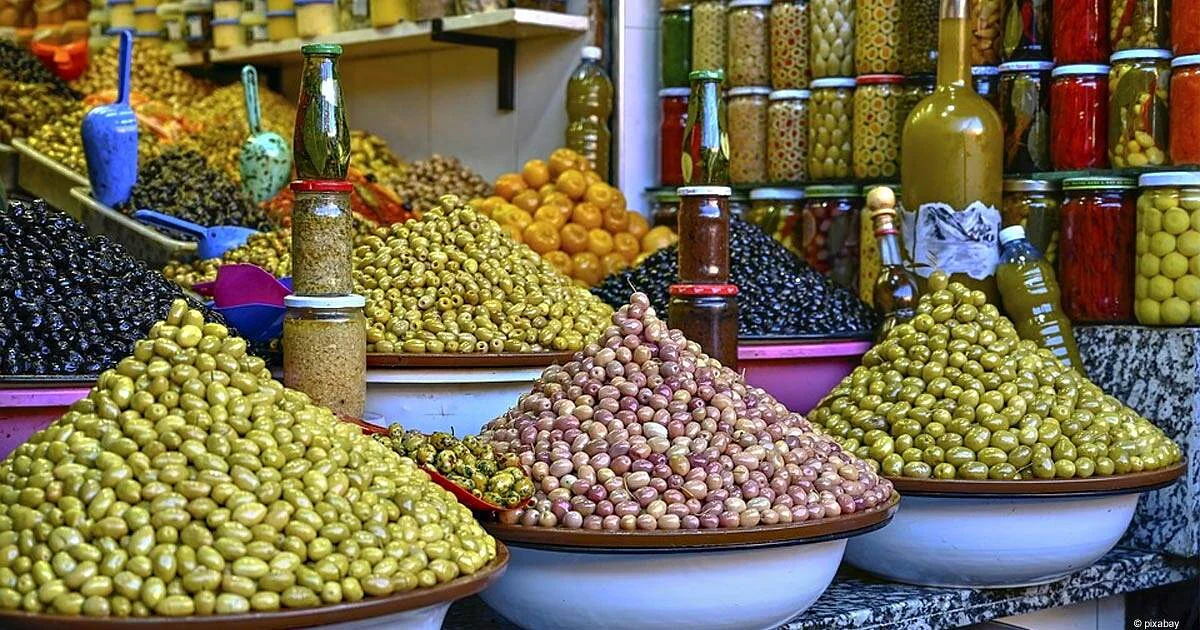
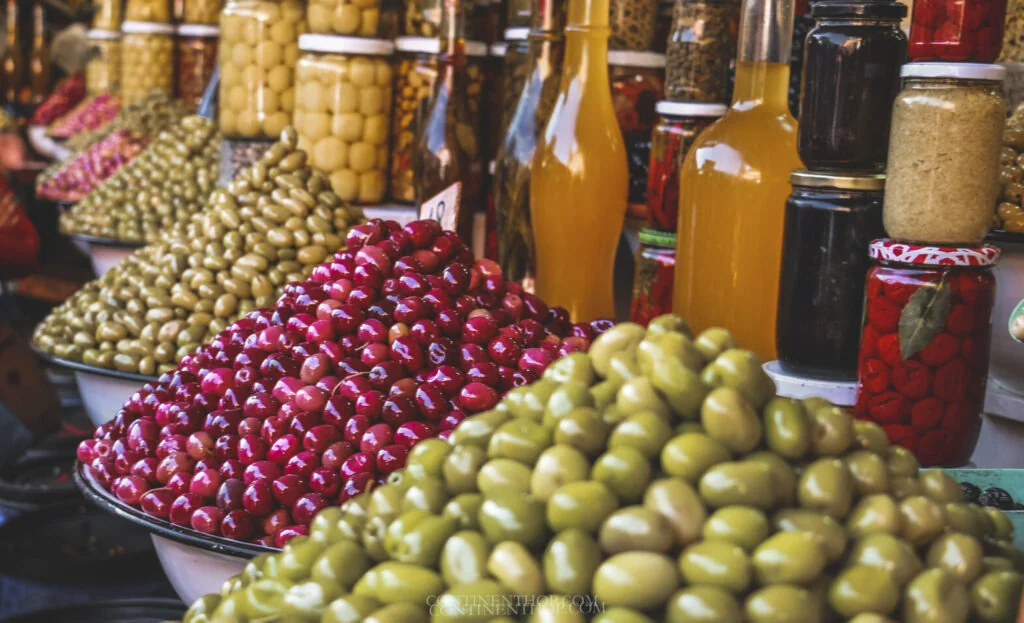
Green, purple and black olives displayed at a Moroccan market stall.Table olives and jarred products at a Marrakech market stall.
Products and presentations to specify
Products and presentations to specify
Type / presentation
Specify in the order
Extra virgin olive oil
Free acidity ≤0.8 g/100 g plus IOC chemical and sensory criteria; acidity alone cannot establish the grade.
Virgin olive oil
Free acidity ≤2 g/100 g plus the other category criteria.
Refined oil and blends
Identify designation and composition; do not describe a blend as extra virgin.
Olive-pomace oil
Separate category: check refining, composition and permitted food use.
Picholine marocaine
Dual-purpose Moroccan cultivar for oil and table olives.
Haouzia / Menara
Moroccan selections from Picholine; identify the lot’s declared cultivar.
Meslala / Dahbia
Other names in Moroccan varietal heritage; cultivar and preparation are different.
Green / turning-colour / black
Declare maturity and treatment; colour does not establish the cultivar.
Whole / pitted / sliced
Specify size count, drained weight, brine, ingredients and tolerances.
Cracked / marinated / stuffed
Agree recipe, allergens, salt content and packaging in the product sheet.
Compare Spain, Italy, Greece, Portugal, Tunisia, Türkiye and Morocco for oil sourcing. Egypt, Spain, Türkiye, Greece, Algeria and Morocco participate in table-olive supply. The United States, Brazil, Canada, Japan and EU are import destinations; producing countries may also import or re-export.
The table covers five IOC-tracked markets in 2024/25. Their sum is 336,000 tonnes: a documented subset, not an Africa-wide total. Domestic consumption and import demand differ. Before projecting sales in Dakar, Abidjan, Lomé, Accra or Johannesburg, test delivered price, pack size and turnover with distributors.
The 2024 customs table covers specific products: virgin oil HS 150910 and prepared olives HS 200570. It is not a total for the entire olive sector. IOC crop years 2023/24, 2024/25 and 2025/26 differ from calendar years; provisional and estimated figures are not final results.
HS 150910: virgin oil in H0 nomenclature, not the whole 1509 heading. HS 200570: prepared olives. Kg converted to tonnes; USD thousands to USD millions. Do not add these to IOC crop-year figures.
Moroccan exports by crop year — IOC snapshot adopted November 2025
Period
Olive oil / Tonnes
Table olives / Tonnes
Status
2023/24
9,000
81,000
Final
2024/25
3,000
88,000
Provisional
2025/26
7,500
82,500
Estimate
Oil: October–September. Olives: September–August. The 2025/26 figures here remain November 2025 estimates, not updated final results.
World olive oil development — million tonnes
Period
Production
Consumption
Status
2023/24
2.589
2.7885
Final
2024/25
3.572
3.215
Provisional
Moroccan export destinations in 2024
Virgin oil: United States, Spain, Canada, Malaysia and Portugal.
Prepared olives: France, United States, Belgium, Italy and Spain.
Picholine marocaine and Haouzia and Menara selections are cultivar references, distinct from recipes. Greek-style black olives, cracked green olives and lemon-marinated olives do not automatically identify a cultivar. Request origin, declared cultivar, size, processing, brine analysis and storage sheet. For oil, obtain crop year, traceability, analyses and sensory assessment appropriate to the grade.
Olive oil supplies unsaturated fats. Replacing more saturated fats may support heart-friendly eating; FDA characterises the evidence as supportive but inconclusive. Substitution should not add calories. It is not a cure. Oil remains energy-dense, and brined olives can be salty: check portions and labels.
Discuss 250 ml–1 L bottles, 3 or 5 L cans, drums or bulk with the packer. Compare olive jars, tins and buckets by drained weight. Agree light and temperature protection, lead time, documents and responsibilities. HS 1509 covers olive oils; HS 200570 identifies the prepared olives in the table. Pomace oil and provisionally preserved olives may use other headings. Confirm tariff classification before customs clearance. Request a container-level offer without assuming stock availability.
Specify product and grade, container-level quantity, packaging, named seaport and schedule. ZARI can receive your request; stock, price and terms require a confirmed offer. Named producing countries do not imply approved suppliers or partnerships.